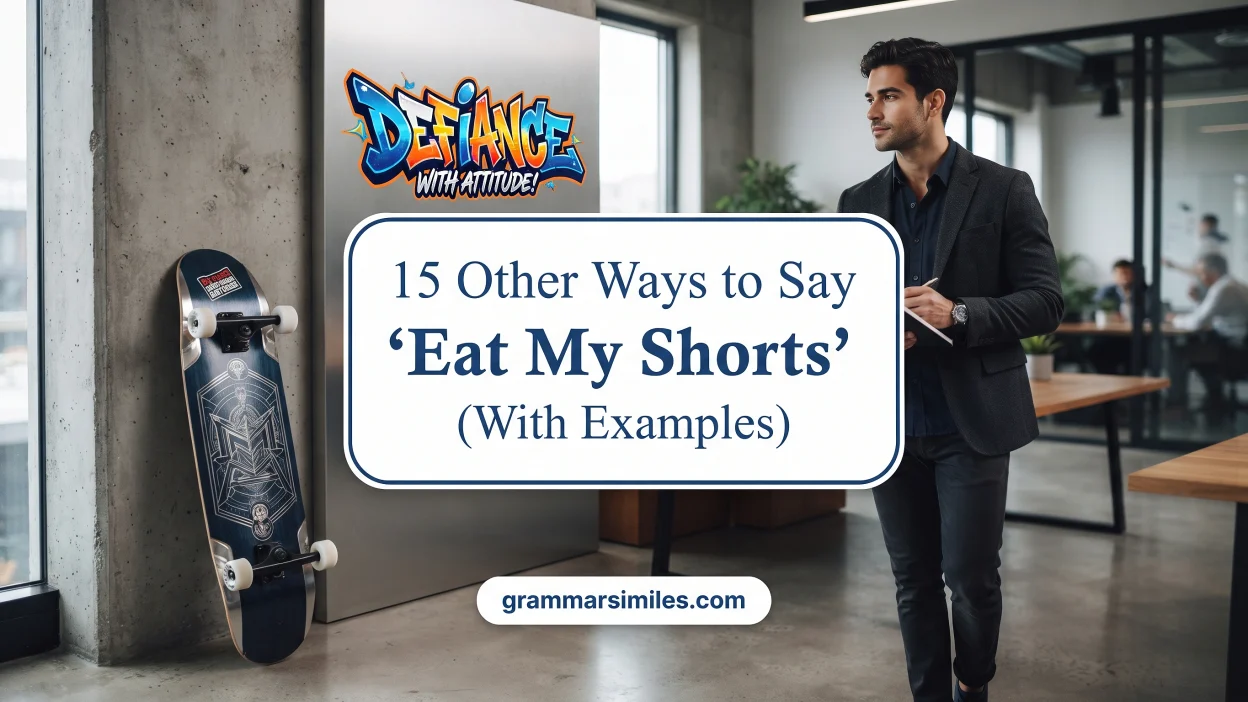
Eat My Shorts is a famous catchphrase that Bart Simpson made popular on The Simpsons. It works as a non-literal expression that rudely dismisses someone with a playful tone. Still, many people want other ways to say Eat My Shorts in everyday conversation. These Eat My Shorts alternatives let you show defiance with witty comebacks and humorous dialogue.
The right informal expressions depend on tone and context, so choosing the right words matters. A cheeky phrase like take a hike or buzz off can express disagreement without crossing a line. Likewise, sarcastic comebacks such as nice try and dream on can reject someone’s criticism in a lighthearted way. Use these funny replies with care, and you can avoid offense while expressing humor.
What Does “Eat My Shorts” Mean?
“Eat my shorts” is an informal, sarcastic expression used to insult someone, dismiss their opinion, or show defiance. It is similar to telling someone that you do not care what they think or that you refuse to take their criticism seriously. The phrase is widely associated with Bart Simpson from The Simpsons, which helped make it recognizable in popular culture. It is usually intended as a joke, a cheeky comeback, or a rude response, depending on the situation. Although friends may use it playfully, it can offend someone when delivered angrily or during a serious disagreement.
Common Situations Where “Eat My Shorts” Is Used
People generally use this expression in casual conversations, humorous arguments, comedy, television dialogue, and playful exchanges between friends. Someone might say it after being teased, challenged, or criticized, especially when they want to respond with sarcasm instead of taking the comment seriously.
The phrase also appears in social media captions, memes, and fictional conversations because it has a recognizable, rebellious tone. However, it is not suitable for most professional emails, formal discussions, or serious personal conversations. In those settings, a calmer or more respectful alternative can communicate disagreement without making the situation worse.
Is It Professional or Polite to Say “Eat My Shorts”?
“Eat my shorts” is casual, sarcastic, and potentially insulting. It is not considered professional language, and it may sound disrespectful when used with a manager, teacher, customer, or someone you do not know well. Among close friends, however, it can be a humorous way to show confidence or respond to harmless teasing.
Whether the expression sounds offensive depends on the relationship, tone of voice, and situation. If you want to disagree without sounding rude, expressions such as “I disagree,” “Think what you want,” or “Nice try” may work better. For comedy or fictional dialogue, stronger expressions can preserve the original phrase’s cheeky attitude.
Advantages and Disadvantages of Saying “Eat My Shorts”
Advantages
The phrase has a playful, rebellious, and memorable quality. It can make a comeback sound funny or exaggerated, especially when the people involved understand the joke. It also communicates defiance quickly, without requiring a long explanation. In comedy, it can give a character a bold personality and make dialogue more entertaining.
Disadvantages
The expression can sound rude, childish, or dismissive when the situation is serious. Some people may interpret it as an invitation to argue rather than a harmless joke. It also offers little room for polite disagreement and is generally unsuitable for formal communication. Choosing a different expression allows you to show humor, confidence, or frustration without creating unnecessary tension.
15 Synonyms and Alternatives for “Eat My Shorts”
- Bite Me
- Get Lost
- Talk to the Hand
- Whatever
- Dream On
- Nice Try
- Make Me
- Think What You Want
- Get Over It
- Not a Chance
- As If
- Yeah, Right
- Save It
- I Couldn’t Care Less
- In Your Dreams
These expressions are not all exact synonyms. Some are playful insults, while others dismiss an opinion, reject a request, or express disbelief. Choose the one that matches your intended meaning.
1. Bite Me
Meaning
“Bite me” is a sarcastic expression used to show irritation, defiance, or a lack of concern about someone’s criticism. Like “eat my shorts,” it can be a cheeky comeback, but it may sound more confrontational.
Definition
A rude or playful way of telling someone that their criticism or opinion does not bother you.
Detailed Explanation
This expression is common in informal American English. It can communicate annoyance when someone keeps teasing or criticizing you. Among close friends, it may be understood as a joke, but with strangers it can sound insulting. Use it when you want a bold response rather than a polite explanation.
Scenario Examples
- Scenario: A friend teases you about your favorite band.
Example: “Bite me! Their music is better than you think.” - Scenario: Someone keeps making unnecessary comments about your clothes.
Example: “Oh, bite me. I like what I’m wearing.”
Best Use
Use it in casual conversations, playful arguments, and fictional dialogue. Avoid it in professional communication or serious disagreements.
Tone
Tone: Sarcastic, defiant, and potentially rude. It expresses irritation more directly than a lighthearted joke.
2. Get Lost
Meaning
“Get lost” is a direct way to tell someone to leave you alone or go away. It shares the dismissive attitude of “eat my shorts,” but it focuses more on ending an interaction.
Definition
An informal command telling someone to go away or stop bothering you.
Detailed Explanation
This expression can sound firm, annoyed, or insulting, depending on the situation. It is useful when someone refuses to respect your space or continues bothering you. Unlike “eat my shorts,” it does not usually carry the same humorous pop-culture feel. A friendly tone may soften it, but the words themselves remain quite direct.
Scenario Examples
- Scenario: A classmate keeps interrupting you while you study.
Example: “Get lost for a minute. I need to finish this assignment.” - Scenario: A fictional character responds to an annoying villain.
Example: “Get lost! You’re not ruining our plans.”
Best Use
Use it in casual speech, dramatic dialogue, or situations where you need to tell someone to stop bothering you. Choose a softer phrase when politeness matters.
Tone
Tone: Direct, dismissive, and sometimes aggressive. It makes your desire to end the interaction clear.
3. Talk to the Hand
Meaning
“Talk to the hand” is a dismissive expression suggesting that you are not interested in listening to someone. It can replace “eat my shorts” when you want a dramatic or humorous response.
Definition
A sarcastic phrase used to show that you do not want to hear what someone is saying.
Detailed Explanation
The expression became recognizable through popular culture and exaggerated gestures. It often sounds theatrical rather than serious, making it suitable for jokes and playful disagreements. Unlike “bite me,” it emphasizes refusing to listen instead of directly insulting the other person. It may sound dated to some speakers, so it works best when the exaggerated style is intentional.
Scenario Examples
- Scenario: Your sibling keeps giving you unwanted advice.
Example: “Talk to the hand. I’ve already made my decision.” - Scenario: A character refuses to listen to a ridiculous excuse.
Example: “Talk to the hand because my ears aren’t interested.”
Best Use
Use it in playful conversations, comedy sketches, memes, and informal dialogue. It is not appropriate for serious workplace discussions.
Tone
Tone: Playful, dramatic, and dismissive. Its exaggerated style makes the rejection sound more theatrical.
4. Whatever
Meaning
“Whatever” is a short response used to dismiss a comment, show indifference, or end an unproductive argument. It can communicate a similar lack of concern to “eat my shorts,” but it is usually less insulting.
Definition
An informal word expressing indifference, dismissal, or unwillingness to continue a discussion.
Detailed Explanation
The meaning of “whatever” depends heavily on how it is delivered. A relaxed tone may show that you are not worried about a minor disagreement, while a sharp tone can sound disrespectful. It is less colorful than “eat my shorts,” but it is easy to use in everyday conversations. Remember that it may frustrate someone who wants a thoughtful response.
Scenario Examples
- Scenario: A friend insists that their favorite movie is better than yours.
Example: “Whatever, we can just agree to disagree.” - Scenario: Someone keeps criticizing your harmless personal choice.
Example: “Whatever. I’m happy with my decision.”
Best Use
Use it in casual conversations and text messages when you want to dismiss a minor disagreement. For important discussions, explain your position instead of ending the conversation abruptly.
Tone
Tone: Casual, indifferent, and sometimes dismissive. Its emotional strength depends on the speaker’s delivery.
5. Dream On

Meaning
“Dream on” is a sarcastic response suggesting that someone’s hopes or expectations are unrealistic. It can replace “eat my shorts” when you want to challenge an exaggerated claim or an unlikely demand.
Definition
An informal expression telling someone that what they expect is unlikely to happen.
Detailed Explanation
This phrase is particularly useful when someone makes an unrealistic prediction or assumes they will get something they want. It sounds more playful than a direct insult, although it can still seem condescending. Unlike “eat my shorts,” it focuses on disbelief rather than general defiance. Use it when the situation calls for a confident, slightly sarcastic comeback.
Scenario Examples
- Scenario: Your friend claims they will win a race without practicing.
Example: “Dream on! You haven’t even started training.” - Scenario: A sibling expects you to give them your new headphones.
Example: “Dream on. I just bought them yesterday.”
Best Use
Use it in friendly teasing, informal arguments, and humorous responses to unrealistic expectations.
Tone
Tone: Sarcastic, confident, and teasing. It challenges someone’s expectations rather than simply telling them to go away.
6. Nice Try
Meaning
“Nice try” is a response used when someone attempts to trick, persuade, challenge, or outsmart you without succeeding. It can provide a lighter alternative to “eat my shorts” when you want to reject an attempt without being openly insulting.
Definition
A phrase acknowledging someone’s attempt while indicating that it did not work.
Detailed Explanation
This expression works well when someone tries to make an excuse, pull a harmless prank, or convince you of something questionable. It can sound friendly when delivered with a smile, but it can also be sarcastic when you suspect manipulation. Unlike “eat my shorts,” it does not necessarily express anger or rebellion. It shows that you recognize the attempt and are not convinced.
Scenario Examples
- Scenario: Your friend tries to convince you that they did not eat your dessert.
Example: “Nice try! I saw the chocolate on your shirt.” - Scenario: A colleague makes a playful attempt to avoid their share of a task.
Example: “Nice try, but you’re still presenting the first section.”
Best Use
Use it for light teasing, friendly challenges, and situations where you want to reject an attempt with humor.
Tone
Tone: Playful, confident, and mildly sarcastic. It can challenge someone without using a direct insult.
7. Make Me
Meaning
“Make me” is a defiant response used when someone orders you to do something you do not want to do. It reflects the rebellious attitude of “eat my shorts,” especially when you want to challenge someone’s authority.
Definition
An informal challenge suggesting that someone cannot force you to do something.
Detailed Explanation
This expression is more confrontational than many other alternatives. It is often used in arguments, fictional confrontations, and playful exchanges between people who know each other well. The words imply resistance rather than indifference, so they are not interchangeable with every use of “eat my shorts.” Avoid using this phrase with people who have legitimate authority over a situation, particularly when a calm response would be more effective.
Scenario Examples
- Scenario: Your sibling orders you to hand over the television remote.
Example: “Make me! I was watching my show first.” - Scenario: A character refuses to follow a villain’s demand.
Example: “You want me to surrender? Make me.”
Best Use
Use it in playful arguments, dramatic dialogue, or situations where defiance is intentional. Avoid it in professional or sensitive conversations.
Tone
Tone: Defiant, challenging, and confrontational. It openly resists another person’s demand.
8. Think What You Want
Meaning
“Think what you want” tells someone that they are free to hold their opinion, even if you disagree with it. It resembles “eat my shorts” when you want to show that criticism will not change your mind.
Definition
A statement allowing someone to keep their opinion without trying to change it.
Detailed Explanation
This expression is useful when an argument is going nowhere and you no longer want to defend yourself. It is generally less aggressive than a direct insult, although it may sound cold if spoken sharply. Unlike “whatever,” it clearly refers to the other person’s opinion. It works well when you want to end a disagreement while maintaining your own position.
Scenario Examples
- Scenario: Someone criticizes your decision to change careers.
Example: “Think what you want. I’m confident this is the right move for me.” - Scenario: A friend refuses to believe your explanation.
Example: “Think what you want, but I’ve told you the truth.”
Best Use
Use it in personal conversations and disagreements where you want to stop defending your position. A more diplomatic version is better for workplace discussions.
Tone
Tone: Firm, independent, and slightly dismissive. It communicates confidence without directly insulting the other person.
9. Get Over It
Meaning
“Get over it” tells someone to stop dwelling on a problem, disappointment, or past event. It can express impatience, but unlike “eat my shorts,” it specifically addresses someone’s continued reaction to something.
Definition
An informal command asking someone to accept a situation and move forward.
Detailed Explanation
People use this phrase when they believe someone is focusing too much on a minor problem or an issue that cannot be changed. However, it can sound insensitive if the other person is genuinely upset. It is not a general replacement for every sarcastic comeback. Choose it only when the idea of moving on fits the situation.
Scenario Examples
- Scenario: Your friend continues complaining about a small disagreement from last week.
Example: “We both apologized already. Let’s get over it and enjoy the day.” - Scenario: A character challenges someone who refuses to accept a fair decision.
Example: “You didn’t get the result you wanted. Get over it.”
Best Use
Use it in informal conversations when discussing minor setbacks or repeated complaints. Avoid it when someone needs empathy or emotional support.
Tone
Tone: Blunt, impatient, and sometimes insensitive. It pushes someone to move on rather than offering comfort.
10. Not a Chance
Meaning
“Not a chance” is a firm way to reject a request, suggestion, or possibility. It can replace “eat my shorts” when the intended message is a strong refusal rather than an insult.
Definition
An expression meaning that something will definitely not happen or that you will not agree to it.
Detailed Explanation
This phrase is useful when you want to make your decision clear without adding unnecessary explanation. It is generally less rude than a personal insult, although its firmness can sound cold in some situations. Unlike “eat my shorts,” it focuses on refusing a request rather than dismissing someone’s entire opinion. It can also communicate playful disbelief when used between friends.
Scenario Examples
- Scenario: Your friend asks to borrow your new laptop for a risky outdoor activity.
Example: “Not a chance! I’m keeping it safely at home.” - Scenario: Someone suggests cancelling a long-planned celebration at the last minute.
Example: “Not a chance. We’ve been planning this for weeks.”
Best Use
Use it in casual discussions, firm refusals, and situations where a clear answer matters. In formal communication, explain your refusal politely.
Tone
Tone: Firm, decisive, and direct. It communicates a clear refusal without necessarily being insulting.
11. As If
Meaning
“As if” is a sarcastic expression used to suggest that something is unlikely, ridiculous, or impossible. It can replace “eat my shorts” when you want to express disbelief in a short, playful way.
Definition
An informal expression showing that you do not believe something will happen or accept a claim as realistic.
Detailed Explanation
This phrase is often used as a quick reaction to an exaggerated claim or an unlikely suggestion. It can sound humorous, dismissive, or incredulous, depending on the conversation. Unlike “eat my shorts,” it usually challenges the idea rather than directly insulting the person who said it. It is especially effective in informal dialogue and playful exchanges.
Scenario Examples
- Scenario: Your friend says they will finish a huge project in five minutes.
Example: “As if! You haven’t even opened the file yet.” - Scenario: Someone claims that you would give up your favorite hobby easily.
Example: “As if. You know how much I love doing this.”
Best Use
Use it in casual conversations, humorous text messages, and creative writing. For clarity in formal settings, explain why you disagree.
Tone
Tone: Sarcastic, incredulous, and playful. It dismisses an idea without necessarily attacking the speaker.
12. Yeah, Right
Meaning
“Yeah, right” is a sarcastic response used when you doubt a statement or believe someone is exaggerating. It shares the dismissive quality of “eat my shorts,” but its main purpose is to express disbelief.
Definition
An informal expression indicating that you do not believe what someone has said.
Detailed Explanation
The phrase can be humorous when a friend makes an obviously exaggerated claim. However, it can also sound cynical or disrespectful if the other person is being sincere. The meaning depends heavily on the speaker’s tone and the surrounding conversation. Use it when you want to show doubt rather than simply refuse a request.
Scenario Examples
- Scenario: Your friend claims they never procrastinate.
Example: “Yeah, right. You started that assignment ten minutes before the deadline.” - Scenario: Someone promises to clean their room immediately after a week of delays.
Example: “Yeah, right. I’ll believe it when I see it.”
Best Use
Use it in informal conversations and friendly teasing. Avoid it when trust and reassurance are important.
Tone
Tone: Skeptical, sarcastic, and sometimes cynical. It communicates doubt rather than direct defiance.
Read More: 15 Other Ways to Say “If Need Be” (With Examples)
13. Save It
Meaning
“Save it” is a dismissive expression telling someone to stop explaining, making excuses, or offering information you do not want to hear. It can serve a similar purpose to “eat my shorts” when you want to reject someone’s words.
Definition
An informal command asking someone to stop talking or keep their explanation to themselves.
Detailed Explanation
This phrase often suggests that the speaker does not believe an excuse or has no interest in hearing more. It is more forceful than a neutral request to stop talking. Unlike “whatever,” it directly tells the other person to stop their explanation. Because it can shut down communication, it is best reserved for casual arguments or dramatic dialogue.
Scenario Examples
- Scenario: Someone repeatedly gives excuses for breaking a promise.
Example: “Save it. I’d rather see you follow through next time.” - Scenario: A character refuses to listen to a dishonest explanation.
Example: “Save it. I already know what happened.”
Best Use
Use it in informal disagreements, fictional dialogue, or situations where you need to end an unwanted explanation. In real conflicts, a calmer request may be more productive.
Tone
Tone: Impatient, dismissive, and firm. It communicates that you do not want to hear any more.
14. I Couldn’t Care Less
Meaning
“I couldn’t care less” means that something does not matter to you at all. It can replace “eat my shorts” when you want to express complete indifference toward criticism, gossip, or someone else’s opinion.
Definition
An expression meaning that you have no interest or concern about a particular issue.
Detailed Explanation
This phrase is more explicit about indifference than many short comebacks. It can sound confident when you genuinely do not care about an unimportant opinion, but it may sound harsh when someone is discussing a serious matter. Unlike “get lost,” it does not tell anyone to leave. Instead, it communicates that their comment has little or no effect on you.
Scenario Examples
- Scenario: Someone criticizes your choice of weekend activities.
Example: “I couldn’t care less about their opinion. I had a great time.” - Scenario: Your friend asks whether you are worried about a minor rumor.
Example: “Honestly, I couldn’t care less about what they’re saying.”
Best Use
Use it in casual conversations when you want to express genuine indifference. In formal or sensitive situations, “That isn’t a concern for me” may sound more respectful.
Tone
Tone: Unbothered, firm, and potentially blunt. It emphasizes a complete lack of concern.
15. In Your Dreams
Meaning
“In your dreams” is a playful or sarcastic response to someone’s unrealistic wish, expectation, or boast. It resembles “eat my shorts” when you want to challenge someone confidently without using a direct insult.
Definition
An informal expression suggesting that something someone wants or expects is unlikely to happen.
Detailed Explanation
This phrase works well when someone makes an ambitious claim or expects to get something they probably will not receive. It can be friendly teasing between people who know each other well. However, it may sound dismissive if the other person is sharing a serious goal. Unlike “not a chance,” it often adds humor by suggesting that the desired outcome exists only in the person’s imagination.
Scenario Examples
- Scenario: Your sibling expects you to lend them your favorite jacket permanently.
Example: “In your dreams! I’m wearing it to the party tonight.” - Scenario: A friend jokingly claims they will beat you at your favorite game without practicing.
Example: “In your dreams. I’ve been training all week.”
Best Use
Use it in friendly banter, humorous disagreements, and playful responses to unrealistic expectations.
Tone
Tone: Teasing, confident, and sarcastic. It challenges an expectation while keeping the exchange lighthearted.
Frequently Asked Questions
What is the Eat My Shorts meaning?
Eat My Shorts is a rude comeback that tells someone to back off. It is not literal, so people use it to dismiss someone in a playful tone.
What are the origins of Eat My Shorts?
Bart Simpson made it a famous catchphrase on The Simpsons. The line began as an ad-lib during a show reading, and it also drew on earlier slang.
What are the best other ways to say Eat My Shorts?
Try buzz off, take a hike, or get lost as similar expressions. They keep the humorous dismissal without the pop culture reference.
Which sarcastic comebacks reject someone’s criticism?
Nice try, dream on, and give me a break work well. They show defiance with lighthearted humor and keep the mood light.
Is Eat My Shorts a potentially offensive phrase?
It can be, so tone and context matter. A playful tone works with friends, but a conversational tone helps you avoid offense in formal settings.
Conclusion
In the end, Eat My Shorts is a famous catchphrase that still brings amusement across generations. These other ways to say Eat My Shorts let you express defiance with witty comebacks and playful tone. Always focus on tone and context, since choosing suitable expressions helps you avoid offense and keep the humor and sarcasm light. So pick the alternative phrases that fit your social context, and communicate confidence with a smile.

Muhammad Haroon is a passionate language enthusiast and experienced writer with multiple years of experience exploring synonyms, similar expressions, and the finer details of English communication. Through his work at GrammarSimiles.com, he helps readers discover better word choices, understand language similarities, and express their ideas with greater clarity and confidence. His goal is to make learning English enjoyable, practical, and accessible. Explore more helpful language guides and stay connected for fresh insights.